
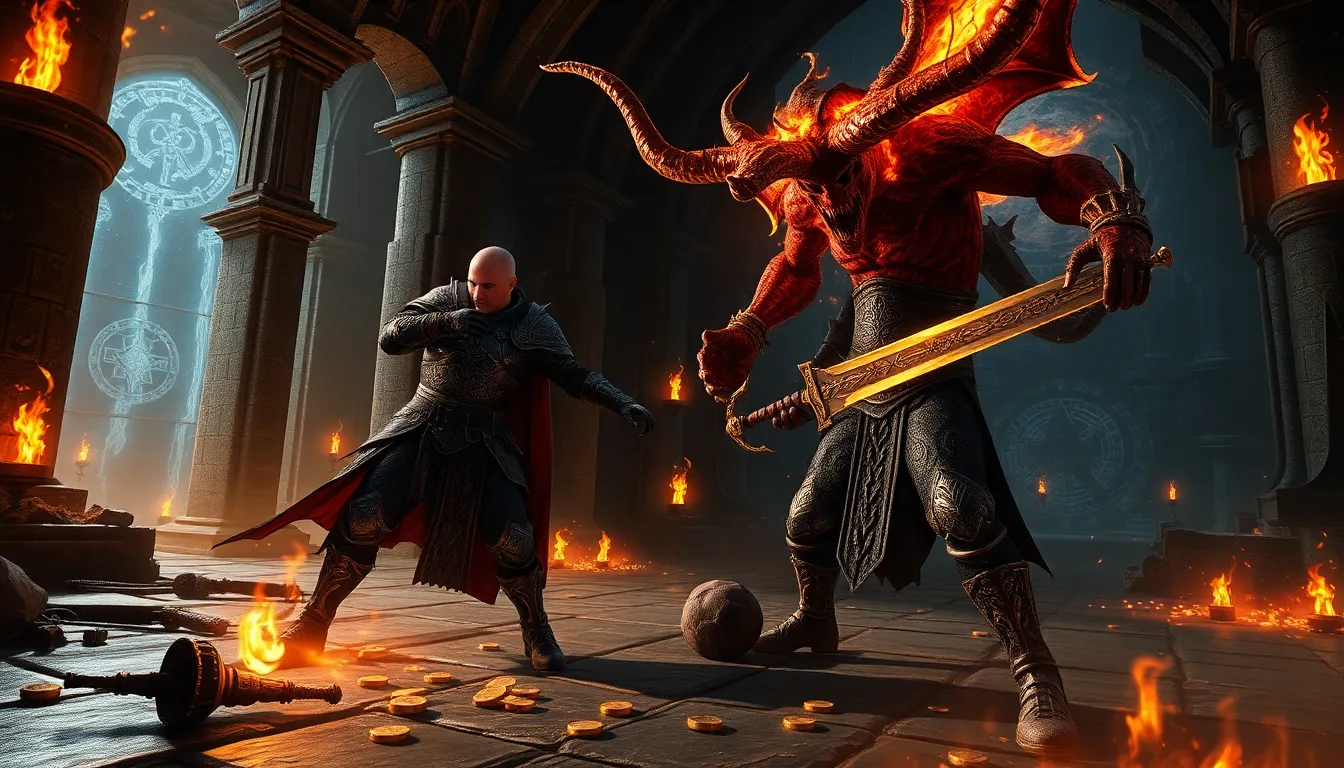
The Diablo franchise has defined action RPG gaming for nearly three decades. From hellish dungeons to legendary loot drops, Diablo examples showcase what makes this series a genre-defining experience. Blizzard Entertainment launched the original Diablo in 1996, and each sequel has expanded the dark fantasy universe with memorable enemies, diverse character classes, and addictive gameplay loops. This article highlights the most iconic Diablo examples across the franchise, covering bosses, classes, items, and mechanics that keep players coming back for more.
Table of Contents
ToggleKey Takeaways
- Diablo examples span iconic bosses like the Prime Evils (Diablo, Mephisto, Baal), memorable minor enemies, and the new antagonist Lilith in Diablo IV.
- Character classes showcase gameplay diversity, with fan favorites like the Necromancer and Barbarian appearing across multiple games in the franchise.
- Legendary loot such as Windforce, Shako, and set items defines character builds and drives the addictive grind that keeps players engaged.
- Skill systems evolved from Diablo II’s permanent skill trees to Diablo III’s flexible runes, with Diablo IV blending both approaches.
- Randomized dungeons and item stat rolls provide endless replayability, ensuring no two playthroughs feel identical.
- Multiplayer innovations like Battle.net, seasonal ladders, and world bosses demonstrate how Diablo examples shaped the online action RPG genre.
Notable Enemy and Boss Examples
Diablo examples of memorable enemies start with the Prime Evils themselves. Diablo, the Lord of Terror, serves as the franchise’s namesake and final boss in multiple games. His fiery attacks and intimidating presence set the standard for boss design in the action RPG genre.
Mephisto, the Lord of Hatred, appears in Diablo II as an Act III boss. Players remember his lightning attacks and the tense battle in the Durance of Hate. Baal, the Lord of Destruction, closes out the Diablo II expansion with a multi-phase fight that tests player skill and gear.
Beyond the Prime Evils, the franchise offers countless Diablo examples of unique enemy design:
- The Butcher – This hulking demon from Diablo I traumatized players with his infamous line: “Ah, fresh meat.” He returns in Diablo III and Diablo IV with updated mechanics.
- Duriel – The maggot-infested Lord of Pain ambushes players in a cramped tomb. Many consider this fight one of the hardest in Diablo II.
- Lilith – Diablo IV introduces the Daughter of Hatred as its central antagonist. Her lore connects deeply to Sanctuary’s creation.
Minor enemies also provide strong Diablo examples of variety. Fallen demons scatter when their shaman dies. Treasure goblins create frantic chases through dungeons. Each enemy type requires different tactics, keeping combat fresh across hundreds of hours.
Character Class Examples Across the Series
Character classes provide some of the best Diablo examples of gameplay diversity. Each class offers distinct skills, playstyles, and fantasy fulfillment.
Classic Classes
The original Diablo featured three classes: Warrior, Rogue, and Sorcerer. These simple archetypes established the melee, ranged, and magic trinity that persists today. Diablo II expanded options dramatically with seven classes total, including the expansion.
The Necromancer stands out among Diablo examples of creative class design. Players summon skeleton armies, curse enemies, and wield bone magic. This class appears in Diablo II, Diablo III, and Diablo IV, proof of its lasting popularity.
The Barbarian offers another iconic Diablo example. This warrior dual-wields weapons, leaps into battle, and uses powerful war cries. The Barbarian appears in every mainline sequel since Diablo II.
Modern Classes
Diablo III introduced new classes that became fan favorites:
- Demon Hunter – A dual-crossbow wielder who combines traps, acrobatics, and hatred-fueled attacks.
- Monk – A martial artist using holy powers and combo-based combat.
- Crusader – A heavily armored holy warrior added in the Reaper of Souls expansion.
Diablo IV continues this tradition with five launch classes. The Rogue returns after decades, offering a blend of melee and ranged combat. The Druid shapeshifts between human, werewolf, and werebear forms while commanding nature magic.
These Diablo examples show Blizzard’s commitment to class variety. Players can spend thousands of hours mastering different builds and playstyles.
Examples of Legendary Loot and Items
Loot drives the Diablo experience. The franchise offers countless Diablo examples of items that define character builds and inspire grinding sessions.
Iconic Weapons and Armor
Windforce remains one of the most famous Diablo examples of legendary loot. This bow from Diablo II deals massive damage and knocks enemies back. Players farmed for weeks to obtain one.
Shako (Harlequin Crest) provides another classic Diablo example. This green helm offers life, mana, damage reduction, and magic find. Almost every build in Diablo II wants one.
Diablo III introduced set items that transform gameplay entirely. The Tal Rasha’s Elements set lets Wizards cycle through elemental attacks for massive damage bonuses. Immortal King’s Call turns Barbarians into permanent Wrath of the Berserker machines.
Unique Items in Diablo IV
Diablo IV continues the tradition with powerful Uniques:
- Harlequin Crest – Returns as an ultra-rare helm with damage reduction and cooldown benefits.
- The Grandfather – A two-handed sword that boosts all stats significantly.
- Doombringer – Reduces enemy damage while dealing shadow damage over time.
These Diablo examples of legendary items create excitement. Every enemy drop could change a character’s power level. The loot hunt keeps players engaged for hundreds of hours.
Memorable Gameplay Mechanics and Features
Beyond enemies and items, Diablo examples of innovative mechanics shaped the action RPG genre.
The Skill System
Diablo II’s skill trees influenced countless games. Players invest points into abilities, creating permanent choices that define each character. The synergy system rewards specialization, boosting one skill increases related skills’ power.
Diablo III changed direction with its rune system. Players swap skills freely, and runes modify each ability’s behavior. A Wizard’s Magic Missile can become multiple projectiles, seeking missiles, or piercing bolts. This flexibility encourages experimentation.
Diablo IV combines both approaches. Players unlock skills through a talent tree but can respec freely for gold. Paragon boards add late-game customization depth.
Randomization and Replayability
Randomized dungeons provide essential Diablo examples of replayability. Maps generate differently each playthrough. Players never memorize layouts, maintaining exploration tension.
Item randomization adds another layer. Two identical legendary items can roll completely different stats. Finding a “perfect roll” keeps veteran players farming.
Multiplayer Features
Diablo pioneered online action RPG multiplayer. Battle.net connected players worldwide for Diablo I. Diablo II expanded this with trading, player-versus-player combat, and ladder seasons.
Diablo III’s seasonal system offers Diablo examples of ongoing engagement. Every few months, players start fresh characters, compete on leaderboards, and chase exclusive rewards. Diablo IV builds on this with live service content and world bosses that require group coordination.
These mechanics show why the franchise endures. Each Diablo example of smart design creates loops that reward skill, time investment, and cooperation.


